Real Jurassic Dino Revolt Game
Gaming TagAdventure
3.92.00 Reviews
- Version
- 1.12
- Installs
- 100.00K
- Age Rating
- Everyone 10+
Screenshots
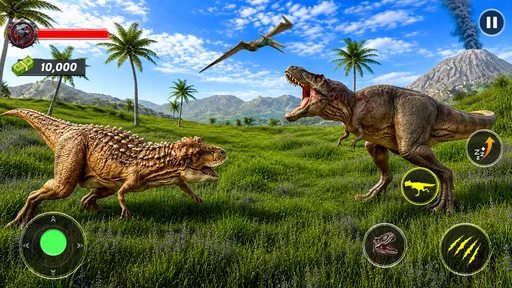
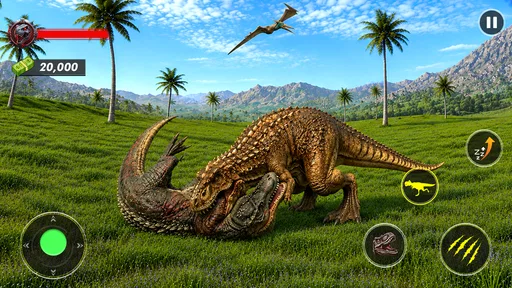
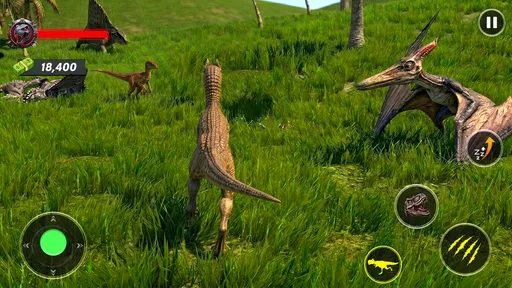
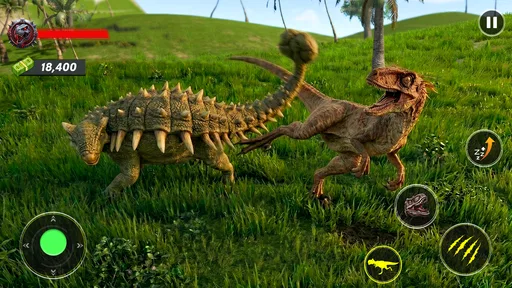
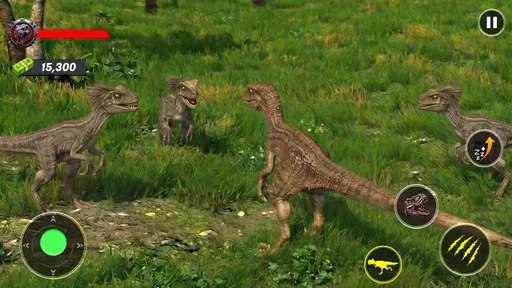
Our Review of Real Jurassic Dino Revolt Game
 Analysis by Appyee
I went into Real Jurassic Dino Revolt expecting a light prehistoric adventure, and that is exactly where it works best. This is a free adventure game from Gaming Tag built around hunting, merging, and evolving dinosaurs. Its central idea is easy to understand, but the appeal comes from how those actions create a steady sense of progress without demanding the kind of commitment associated with a large, story-heavy role-playing game.
My first impression was that the game is designed for quick decisions rather than long explanations. You are presented with a prehistoric theme, a collection-focused objective, and a progression loop that encourages you to keep improving your dinosaurs. I could understand the basic purpose quickly, which matters on a mobile screen: the game does not need a complicated premise to make the next action feel obvious.
The game currently carries a 3.9 average from around 250 ratings, and it has passed 100,000 installs. Those figures suggest that it has found an audience, although they also set the right expectation: this is a focused mobile adventure, not a giant dinosaur simulation with the depth of a full console production. I think that distinction is important before downloading it.
A prehistoric world built from readable ideas
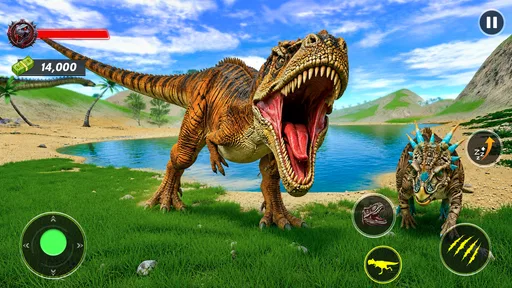
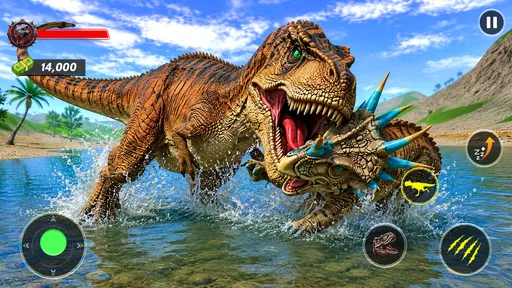
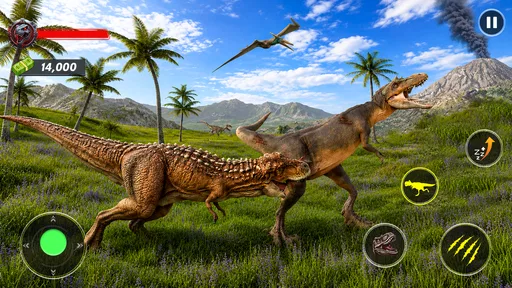
The strongest part of the presentation is its clear visual language. Dinosaurs are immediately understandable as the stars of the experience, while the prehistoric setting gives the collecting and evolution loop a natural reason to exist. Instead of asking me to learn an abstract set of symbols, the game frames improvement through creatures that are easy to recognize and emotionally engaging.
That clarity helps the merge concept. When two or more related creatures become part of a stronger result, the action feels connected to the theme rather than pasted onto it. I did not need a long story to understand why I should keep searching for dinosaurs or why combining progress mattered. The setting does useful work in the background, making the mechanics feel more coherent.
The art direction also affects how approachable the game feels. A dinosaur game can easily become too aggressive or overly technical, especially if it focuses on battles, statistics, and survival. This one leans toward a friendlier adventure mood. That makes it suitable for players who enjoy prehistoric creatures but do not necessarily want a demanding strategy game.
That approachable style has a trade-off. If you are looking for scientifically detailed dinosaurs, a serious survival environment, or a richly developed Jurassic narrative, this is probably not the right match. The game’s identity is based more on accessible collection and transformation than on realism. I see that as a deliberate choice, but it does narrow the audience.
One useful way to approach the visual design is to treat each new dinosaur as a progress marker. Rather than rushing through every available action, I found it more satisfying to notice which creatures were worth keeping in mind for future combinations. This turns the screen into a small planning space: I am not only tapping to advance, I am deciding which part of the collection should receive attention next.
That habit is especially helpful when playing in short sessions. If I have only a few minutes, I can open the game with a simple goal, such as hunting for a particular improvement or organizing the next merge. The prehistoric setting gives that small task enough personality to feel like a game rather than a bare progress tracker.
How the setting supports the collection loop
The setting works because it gives every major action a recognizable purpose. Hunting suggests discovery, merging suggests growth, and evolution suggests a visible reward for persistence. These ideas belong together, so the game does not feel as if it is switching between unrelated activities.
I also appreciate that the dinosaur theme makes progress easy to explain to another player. If a friend asked what I was doing, I could describe it in one sentence: I was searching for dinosaurs and combining them to create stronger forms. That simplicity is valuable on mobile, where a game often competes with interruptions and limited attention.
Still, players who need a strong narrative may find the world thin. The appeal is in the loop and the mood, not in following a complex cast or uncovering a carefully layered plot. I would recommend it to someone who wants a themed collecting game first and an adventure story second.
Sound, rhythm, and the feel of a short session
The game’s mood depends on more than its dinosaur imagery. The pacing is important because the experience is built around repeated actions. If those actions were too slow, the collecting would become tedious; if they were too rapid, the merges and evolutions would lose their sense of reward. The best moments come when the game lets a completed action register before moving me toward the next objective.
I found the rhythm most comfortable when I treated each session as a small expedition. I would look for a clear immediate task, make progress toward it, and stop after reaching a natural point rather than continuing without a plan. That approach keeps the loop from feeling like endless tapping. It also makes the game fit naturally into a break, a commute, or a few minutes before bed.
The sound design contributes to that rhythm by helping actions feel distinct. In a game based on repeated collection and improvement, audio feedback is useful when it confirms that something meaningful happened. It gives a merge or evolution a little more weight than a silent interface would provide.
At the same time, players who prefer quiet mobile games may want to manage their sound depending on where they play. The game’s atmosphere is more effective when audio is available, but the simple structure means I can also focus on the visual feedback when I need a less noticeable session. I would not choose this as a sound-first experience, yet the audio supports the prehistoric mood rather than fighting it.
The pacing also reveals one of the game’s limitations. Repetition is part of the design, so anyone who needs constant surprises may lose interest. The appeal comes from gradual improvement and the anticipation of the next useful combination. If you dislike loops that ask you to repeat familiar actions, the dinosaur theme alone may not be enough to keep you engaged.
My practical tip is to avoid playing without a short-term objective. Decide whether you are hunting, preparing a merge, or trying to evolve a creature, then let that intention guide the session. This makes the rhythm feel purposeful and reduces the chance that the game turns into aimless tapping.
Where the mechanics fit—and where they ask for patience
The core mechanics are easy to grasp, but that does not mean every decision is meaningless. Hunting gives the session direction, merging provides a reason to gather related pieces, and evolution creates the feeling that earlier effort has led somewhere. The loop is most satisfying when I think one step ahead rather than immediately using every available resource.
That is the first non-obvious strength I noticed: the game rewards a little restraint. It can be tempting to merge as soon as an opportunity appears, but pausing to consider what I am trying to build makes the collection feel more deliberate. Even in a casual adventure game, keeping a small mental plan improves the experience.
A second useful insight is that the game works better when I separate progress from completion. I do not need to treat every session as a push toward a final collection. The more comfortable approach is to regard each hunt or merge as one contribution to a longer sequence. That mindset makes the game less frustrating when a desired result is not immediately available.
The third trade-off concerns spending. The game is free to download, while optional in-app purchases range from $2.99 to $9.99 per item. I would begin without spending and first decide whether the hunting and merging loop genuinely holds my attention. If the repetition already feels tiring during the free experience, purchasing an item is unlikely to solve the underlying issue.
For players who enjoy gradual collection, optional purchases may feel like a convenience rather than a requirement. For players who want every improvement to come quickly, the presence of paid items can affect the sense of pacing. My advice is to treat the free version as the real audition: play it at your natural speed and do not let the promise of faster progress determine whether you like the mechanics.
The age rating is Everyone 10+, which fits the game’s accessible adventure presentation. I would still explain the purchase system to younger players and keep spending decisions with an adult. That is not because the theme is especially harsh, but because a free game with optional items can make progression feel tempting when a player wants to reach the next dinosaur quickly.
Compatibility is also straightforward for many older devices, since the game requires Android 7.0 or later. That makes it more approachable than games that demand recent hardware or a newer operating system. I would still judge the experience by how smoothly the individual device handles it, but the software requirement does not push it toward only the newest phones.
Who will enjoy the loop most?
I think the best audience is someone who likes casual collecting with a clear theme. If you enjoy seeing a group of creatures grow, making combinations, and returning for another small objective, the structure is easy to appreciate. It is also a good fit for dinosaur fans who want something lighter than a survival game.
A realistic everyday scenario would be a short evening session after finishing work or school. I might open the game with ten minutes available, check which dinosaur-related goal looks closest, and use that time to hunt and merge rather than begin a long campaign. The game suits that situation because its premise is immediately readable and its progress can be measured in small steps.
I would be more cautious about recommending it to someone searching for a competitive strategy experience. The game’s appeal is not based on deep tactical combat or a broad multiplayer ecosystem. Likewise, fans of narrative adventures may prefer a title where exploration, dialogue, and character development carry more of the experience.
Compared with a typical dinosaur survival game, this is less demanding and less immersive in the simulation sense. Compared with a pure merge game, its prehistoric theme gives the repeated combinations more personality. That middle position is its main advantage: it offers a familiar casual structure while giving it a specific world and collection goal.
Long-term appeal and the points that may wear thin
The long-term question is whether the satisfaction of hunting, merging, and evolving remains strong after the first novelty fades. I think the answer depends heavily on what you expect from mobile play. If you are happy with a repeatable loop and enjoy incremental collection, the game can become a pleasant routine. If you need frequent mechanical changes, the same structure may start to feel narrow.
The progression is easiest to enjoy when I give myself permission to stop. Because the game is free and built around returning to improve a collection, it can encourage the feeling that there is always one more action to complete. I found it healthier to finish at a clear milestone. That preserves the sense of anticipation instead of turning the game into a chore.
Another point to consider is attention. The simple premise is a benefit when I am distracted, but it also means the game may not hold me during a long uninterrupted session as well as a larger adventure. I would use it as a compact activity, not as my only game for an entire afternoon.
The current version is 1.12, and the developer is Gaming Tag. Those details are useful when checking that the installed app matches the intended release, especially if several similarly named dinosaur games appear in a search. The short store name is Jurassic Dino Revolt, while the game’s fuller identity emphasizes the prehistoric adventure idea.
I also think the game benefits from being judged on its own scale. It does not need to compete directly with expensive-looking dinosaur worlds to be enjoyable. Its value comes from making a small set of actions understandable, themed, and easy to revisit. Expecting a huge open world would create disappointment that the game itself does not invite.
On the other hand, players should not mistake a friendly presentation for unlimited depth. The collection loop still asks for patience, and the optional purchases can make the route to progress feel more attractive to some people than others. I would skip it if I already know that repeated merging frustrates me or that I prefer games with a strong ending and a defined campaign.
My atmosphere verdict
After spending time with it, I see Real Jurassic Dino Revolt as a compact adventure built around mood, clarity, and gradual dinosaur progression. Its art direction gives the mechanics an obvious home, its sound and feedback support the rhythm of short sessions, and its prehistoric setting makes familiar collection actions easier to care about.
My favorite way to play is to set one modest goal, preserve useful creatures instead of merging without thought, and stop after a satisfying improvement. That workflow brings out more of the game than simply tapping through every available action. It also helps manage the repetitive side of the design and keeps the experience relaxed.
I would recommend it to dinosaur fans, casual players, and anyone who enjoys a free merge-and-evolve loop with an adventure flavor. I would not recommend it to players seeking realism, complex strategy, a substantial story, or a long-form survival simulation. Those expectations point toward a different kind of game.
Overall, the game succeeds because its presentation and mechanics speak the same language. Hunting, merging, and evolving all support the same prehistoric fantasy, so the experience feels coherent even when it remains simple. If you want a friendly dinosaur game for focused bursts of collecting and steady progress, this is worth trying before deciding whether its optional purchases or repeated rhythm suit you.
Verdict
Strengths of Real Jurassic Dino Revolt Game
- Easy controls make it accessible for younger players.
- Dinosaur variety keeps encounters feeling fresh.
- Offline play is useful when you have no internet connection.
- Short missions suit quick gaming sessions.
- Bright visuals make the prehistoric world engaging.
Limitations of Real Jurassic Dino Revolt Game
- Some levels can feel repetitive after extended play.
- Progress may take time without optional purchases.
- Device performance can affect loading and frame rates.
- The camera may be awkward during fast dinosaur encounters.
- Limited story depth may disappoint players seeking a richer adventure.
Similar Picks in This Category
View All
Roblox
Roblox Corporation4.2

Pokémon GO
Niantic, Inc.3.5

Ninja warrior: legend of adven
TOH Games4.6

Ninja Arashi
Black Panther4.6

Eyes - The Horror Game
Fearless Games sp. j.4.5

Critical Action:Gun Strike Ops
FPS Shooter & Action Game4.3
Frequently Asked Questions
What is Real Jurassic Dino Revolt Game about?
Real Jurassic Dino Revolt Game is an action-focused dinosaur experience in which you explore prehistoric environments, encounter dangerous creatures, and complete missions involving survival, combat, and discovery. The game is designed for players who enjoy Jurassic-themed adventures, dinosaur battles, and fast-paced challenges. Depending on the mode, you may need to hunt, escape, defend yourself, or defeat powerful dinosaurs while progressing through different stages.
Can I play Real Jurassic Dino Revolt Game offline?
The game may allow some single-player content to be played without a constant internet connection, which is useful when traveling or when mobile data is unavailable. However, certain features can require online access, including advertisements, updates, cloud-related functions, or additional content. It is best to launch the game once while connected to Wi-Fi and check which missions and features remain available after switching to offline mode.
Is Real Jurassic Dino Revolt Game suitable for children?
Real Jurassic Dino Revolt Game can be entertaining for dinosaur fans, but parents should review its content before allowing younger children to play. The gameplay may include dinosaur attacks, weapons, hunting elements, frightening sounds, and intense action. The appropriate age can also depend on the platform rating and the child’s sensitivity to violence or suspense. Parental controls are recommended, especially if the game includes advertising or in-app purchases.
Does Real Jurassic Dino Revolt Game include in-app purchases or advertisements?
Like many free mobile games, Real Jurassic Dino Revolt Game may include advertisements and optional in-app purchases. Ads can appear between missions or when you choose to receive rewards, while purchases may unlock upgrades, resources, characters, or other gameplay advantages. Before downloading, check the store listing for the current monetization details. If children use the device, password protection for purchases can help prevent accidental spending.
What device requirements and permissions does the game need?
Because Real Jurassic Dino Revolt Game features 3D environments, animated dinosaurs, and action gameplay, performance can vary depending on your phone or tablet. A newer device with sufficient storage, memory, and updated Android or iOS software should provide a smoother experience. The game may also request permissions related to network access, notifications, or personalized advertising. Review these requests carefully and keep extra storage available for updates and downloaded game data.
Play our best games!


